






Best Hot Tubs for Small Backyards: Compact Models That Still Feel Luxurious
A small backyard doesn’t mean you have to give up on having a personal wellness retreat. Some of the most satisfying spa setups we’ve helped Idaho homeowners create have been in the tightest spaces: a corner of a covered deck, a reinforced patio tucked beside the house or a side yard that most people would overlook. The secret is choosing the right small hot tub and setting it up well.
Here’s what you need to know about finding the best small hot tubs for compact outdoor spaces without compromising on comfort, quality or hydrotherapy.
Why Small Outdoor Hot Tubs Make a Lot of Sense
Small outdoor hot tubs aren’t a compromise. For many buyers, they’re the smarter choice. Less water volume means faster heat-up times, lower monthly energy costs and a footprint that fits into spaces where a full-size spa simply won’t go. For couples, empty-nesters or anyone who wants a personal wellness soak rather than a party spa, small jacuzzi hot tubs deliver everything that matters without the overhead of a larger model.
From a health standpoint, size doesn’t affect performance. The same combination of heat, buoyancy and targeted hydrotherapy jets that makes larger spas effective for muscle recovery, joint relief and sleep quality is fully available in compact models. If you’re dealing with back tension, sciatic nerve discomfort or just the physical grind of a busy week, a well-designed small hot tub with the right jet placement will do the job.

Where to Put a Hot Tub in a Small Backyard
To create a cozy corner oasis in a small backyard jacuzzi setup, position your hot tub on a raised area or reinforced deck to improve the view and make it the centerpiece of the space. Incorporate local plants such as lilies and ferns to enhance the aesthetic and foster a more private, relaxing environment. Even a modest patio planting can transform a functional installation into something that genuinely feels like a retreat. Beyond the corner placement, a few other options work well in tight spaces:
- Recessed into a deck: Building the spa down into a deck frame creates a seamless, high-end look and lowers the step-in height. It requires some planning and a proper access panel for maintenance, but the result is worth it.
- Under a pergola or shade structure: Overhead coverage adds privacy, extends usability into summer afternoons and gives the space a defined, intentional feel.
- On a reinforced concrete patio: A concrete pad is often the simplest and most cost-effective base for a small hot tub for a deck or a patio. It handles the weight without the structural engineering that a wood deck sometimes requires.
One practical note on placement: Keep your spa at least 5 feet from any structure and 16 feet from overhead power lines. In tight yards, this matters more than people expect and it affects where you can realistically site the tub before you fall in love with a location that won’t work.
What to Look for in Hot Tubs for Small Spaces
When shopping for hot tubs for small spaces, the most important thing to remember is that compact shouldn’t mean cheap. The features that make a spa worth owning (robust insulation, a quality acrylic or rotationally molded shell, reliable jet systems and durable cabinetry) are just as important in a smaller model. Skip them and you’ll spend more over time through energy costs, repairs and early replacement. A few features worth prioritizing specifically for compact models:
- Salt-water compatibility. Premium small jacuzzi hot tubs from brands like Hot Spring support salt-water systems, which produce softer water, reduce chemical smell and are gentler on skin. Many budget tubs can’t support these systems due to lower-grade internal components; it’s one of the clearest differences between a quality spa and an inexpensive one.
- Targeted neck and shoulder jets. In a 2-person small hot tub, jet placement matters even more than in a larger spa. Look for models with dedicated neck and shoulder therapy positions rather than generic jets that don’t address specific muscle groups.
- Full-foam insulation. This is what separates a spa that’s economical to run from one that bleeds heat overnight. Especially in Idaho winters, full-foam insulation keeps operating costs manageable year-round.
- LED lighting. Ambient lighting transforms an evening soak. It’s a small feature that makes a consistent difference in how much you actually use the spa.

Portable Small Hot Tubs: The Plug-and-Play Option
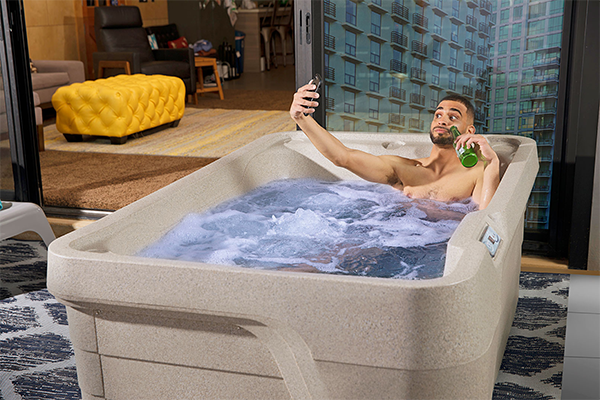
If you want maximum flexibility, or you’re not ready to commit to a permanent installation, portable small hot tubs are worth a serious look. The Freeflow Mini by Hot Spring, available through Snake River Pool & Spa, is a purpose-built tiny hot tub that fits on almost any patio, balcony or deck.
It runs on a standard 110V outlet with no electrician required, weighs around 250 lbs dry and fits through standard doorways. This matters enormously when you’re navigating a narrow side yard or gated fence line.
Portable small hot tubs like the Freeflow Mini are also a practical answer to the logistics problem that stops a lot of small-yard owners from buying. How do you get a hot tub into a tight space? Rotomolded unibody construction means no separate cabinet to wrestle through a gate. You fill it from a hose, plug it in and you’re ready.

Big Box vs. Local: Why Cheap Small Jacuzzi Options Cost More in the Long Run
Walk into a big-box store or browse a warehouse club and you’ll find small jacuzzi options that look appealing on price. The honest answer to why they’re so cheap: compromised shell thickness, lower-grade components and minimal insulation. A thin shell cracks. Poor insulation means your heater runs constantly. Budget pumps and jets fail faster. And when something goes wrong, there’s no local service team to call.
True value in a best small hot tub purchase comes from durability, a proper warranty and a dealer relationship that lasts past delivery day. A spa that runs efficiently for 15 years costs far less than a cheap one you replace in five, especially when you factor in energy bills.
Getting It Into Your Yard: White-Glove Delivery
One of the most overlooked parts of buying a small hot tub for deck or patio installation is getting it there. Narrow side gates, fences, landscaping and uneven ground can make delivery a genuine challenge, especially for heavier acrylic models.
Snake River Pool & Spa handles this with white-glove delivery, a professional installation team that assesses your space, manages the logistics and gets your spa placed correctly from the start. It’s the kind of service that simply doesn’t exist with online purchases or brands without a strong local presence. Moreover, it saves homeowners from expensive surprises on delivery day.
Maintenance Made Easy
Once your small outdoor hot tub is in place, keeping it running well is straightforward, especially with the right support. Our valet spa care plans handle routine water care and maintenance for owners who’d rather spend their time soaking than balancing chemicals. For busy professionals or anyone new to spa ownership, it’s a practical way to protect your investment without the learning curve.
For water care guidance and ongoing maintenance tips, the Snake River Pool & Spa team is available across their Boise, Meridian, Nampa and Twin Falls locations. If you’re ready to find the right small hot tub for your space, browse the current hot tub selection or stop into a showroom to talk through your options. A compact footprint and a full-featured spa aren’t mutually exclusive; you just need the right model and the right team behind it.
FAQs – Frequently Asked Questions
What’s the best hot tub for a small backyard?
The best option depends on your space and how you plan to use it, but compact models from trusted brands like Hot Spring and Caldera consistently deliver premium features, quality insulation, salt-water compatibility and targeted hydrotherapy in a footprint that works for smaller yards. For maximum flexibility, a portable plug-and-play model is hard to beat.
Where to put a hot tub in a small backyard?
Position it in a corner on a reinforced deck or concrete pad, keeping at least 5 feet of clearance from any structure and 16 feet from overhead power lines. Corner placements maximize usable yard space and adding plants or a pergola around it adds privacy and makes the space feel intentional rather than just functional.
What is the smallest hot tub they make?
Among quality brands, the Freeflow Mini is one of the most compact options available. A two-person, rotationally molded spa that measures roughly 6 feet by 4 feet, runs on a standard 110V outlet and weighs around 250 lbs without water. It’s designed specifically for tight spaces where a traditional spa won’t fit.